
Cholangiocarcinoma is a molecularly
heterogeneous disease1
The heterogeneity of genetic alterations of cholangiocarcinoma provides an avenue for targeted therapeutic approaches1
of patients with cholangiocarcinoma harbour actionable genetic alterations1
Discover more about the genetic heterogenicity of CCA – download Understanding CCA’s Genetic Diversity today
A number of actionable genetic alterations in cholangiocarcinoma have been identified1
Frequency estimates are derived from a retrospective genomic analysis of data from 6,130 patients with intrahepatic cholangiocarcinoma.1 Therapeutic classes reflect both currently approved and investigational treatment approaches.2,3
| Actionable genetic alterations1,3 | Reported frequency (%)1 | Drug class1–4 |
|---|---|---|
| IDH1/2 | 18 | IDH inhibitors* |
| FGFR2 | 12 | FGFR2 inhibitors* |
| ERBB2/HER2 | 5 | HER2-targeted agents* |
| BRAF | 5 | BRAF/MEK inhibitors† |
| MDM2 | 4 | MDM2 inhibitors‡ |
| TMBhigh | 4 | Immune checkpoint inhibitors† |
| BRCA1/2 | 3 | PARP inhibitors‡ |
| MET | 2 | MET inhibitors‡ |
| MSIhigh/dMMR | 1 | Immune checkpoint inhibitors* |
| KRASG12C | 1 | KRAS G12C inhibitors‡ |
| PALB2 | NR | PARP inhibitors‡ |
| NTRK | NR | NTRK inhibitors* |
| RET | NR | RET inhibitors§ |
*Approved by the FDA, EMA and MHRA for the treatment of cholangiocarcinoma.1,3,5–13
†FDA-approved, not EMA- or MHRA-approved for cholangiocarcinoma.1–3
‡Subject of ongoing clinical trials.1,3,4
§FDA-approved, subject to EMA conditional approval and not MHRA-approved for cholangiocarcinoma.3
Effective identification of actionable mutations in cholangiocarcinoma requires selecting the right molecular profiling approach14
- FGFR2 fusions illustrate the structural complexity seen in fusion-driven cancers15
- More than 150 fusion partners have been described, emphasising the importance of using NGS methods capable of detecting both known and novel rearrangements16
- NGS-based methodologies are recommended by ESMO and considered the gold standard approach, as they enable comprehensive multiplex testing for a broad range of genomic alterations14–18
NGS testing methods are not all equivalent when it comes to molecular profiling14
Considering the diversity of alterations (mutations and fusions) in cholangiocarcinoma, NGS-testing should be performed on DNA and RNA, ideally from the same biopsy.14
| Methodology | Detection ability when DNA- and RNA‑based assays are conducted | Example assays | |
|---|---|---|---|
| Hybrid capture-based assays: detect gene fusions regardless of the fusion partner | 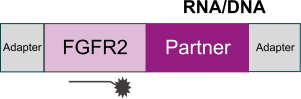 Two generic adapters with target enrichment before sequencing using FGFR2 specific hybridisation probes – targeted RNA molecules are captured regardless of whether the sequence continues as wild-type FGFR2 or with an alternative sequence as a result of a fusion event | Able to detect 100% of possible rearrangements/ | Illumina® Tissue Panels |
| Single-primer extension based approach: depending on panel design, detects most gene fusions regardless of the fusion partner | 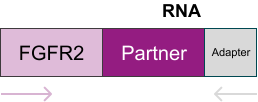 | With some panels, able to detect up to 94%–97% of the possible rearrangements/  | Archer Dx FusionPlex® Panels |
| Amplicon-based approach: detects gene fusions for which a corresponding primer pair is included in the panel design | 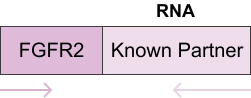 | Predicted ability to detect 28.5% of the putative fusions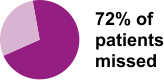 | ThermoFisher Oncomine® Panels |

A primer is a short, single-stranded synthetic oligonucleotide that acts as a starting point for DNA synthesis.
- Hybrid capture-based NGS performed on DNA and RNA is the optimal test to detect most of the possible alterations (ie mutations, fusions, amplifications), in cholangiocarcinoma14
- Use of amplicon-based NGS technologies lead to a loss of opportunity for 7 out of 10 patients14
ESMO guidelines recommend performing molecular profiling before or during first-line therapy in CCA to evaluate second-line treatment options as early as possible2,18,19
 Test earlyTest rightTest every
patient
Recommended biomarkers:20 IDH1, FGFR2, HER2, BRAFV600E, BRCA1/2, PALB2, KRASG12C, NTRK, RET, MSIhigh/dMMR
CCA, cholangiocarcinoma; dMMR, mismatch repair deficient; DNA, deoxyribonucleic acid; EMA, European Medicines Agency; ESMO, European Society for Medical Oncology; FDA, Food and Drug Administration; FGFR, fibroblast growth factor receptor; iCCA, intrahepatic cholangiocarcinoma; IDH, isocitrate dehydrogenase; MHRA, Medicines and Healthcare products Regulatory Agency; MSIhigh, microsatellite instability high; NGS, next-generation sequencing; NR, not reported; RNA, ribonucleic acid; TMBhigh, tumour mutational burden high.
References: 1. Kendre G, et al. J Hepatol. 2023;78(3):614–626; 2. Vogel A, et al. ESMO Open. 2025;10(1):104003; 3. Rimassa L, et al. Lancet Reg Health Eur. 2025;50:101170; 4. Banales JM, et al. Nat Rev Gastroenterol Hepatol. 2026;23(1):65–96; 5. Tibsovo Summary of Product Characteristics. Available at https://products.mhra.gov.uk/search/?search=tibsovo&page=1 [accessed June 2026]; 6. Lytgobi Summary of Product Characteristics. Available at https://products.mhra.gov.uk/search/?search=lytgobi&page=1 [accessed June 2026]; 7. Pemazyre Summary of Product Characteristics. Available at https://products.mhra.gov.uk/search/?search=pemazyre&page=1 [accessed June 2026]; 8. Keytruda Summary of Product Characteristics. Available at https://products.mhra.gov.uk/search/?search=keytruda&page=1 [accessed June 2026]; 9. Rozlytrek Summary of Product Characteristics. Available at https://products.mhra.gov.uk/search/?search=rozlytrek&page=1 [accessed June 2026]; 10. Vitrakvi Summary of Product Characteristics. Available at https://products.mhra.gov.uk/search/?search=VITRAKVI&page=1 [accessed June 2026]; 11. Ziihera US Prescribing Information. Available at https://www.accessdata.fda.gov/drugsatfda_docs/label/2024/761416s000lbl.pdf [accessed June 2026]; 12. Ziihera Summary of Product Characteristics. Available at https://www.ema.europa.eu/en/documents/product-information/ziihera-epar-product-information_en.pdf [accessed June 2026]; 13. Ziihera Summary of Product Characteristics. Available at https://products.mhra.gov.uk/search/?search=ziihera&page=1 [accessed June 2026]; 14. Neumann O, et al. Br J Cancer. 2022;127(8):1540–1549; 15. Krook MA, et al. Br J Cancer. 2021;124(5):880–892; 16. Angerilli V, et al. Pathologica. 2023;115(2):71–82; 17. Ellinghaus P, et al. Cells. 2022;11(19):3180; 18. Mosele F, et al. Ann Oncol. 2020;31(11):1491–1505; 19. Vogel A, et al. Ann Oncol. 2023;34(2):127–140; 20. Vogel A, et al. ESMO Open. 2025;10(1):104003. Supplementary material.